
The build for Night Simulator didn’t start in a game engine; it started with a family visit.
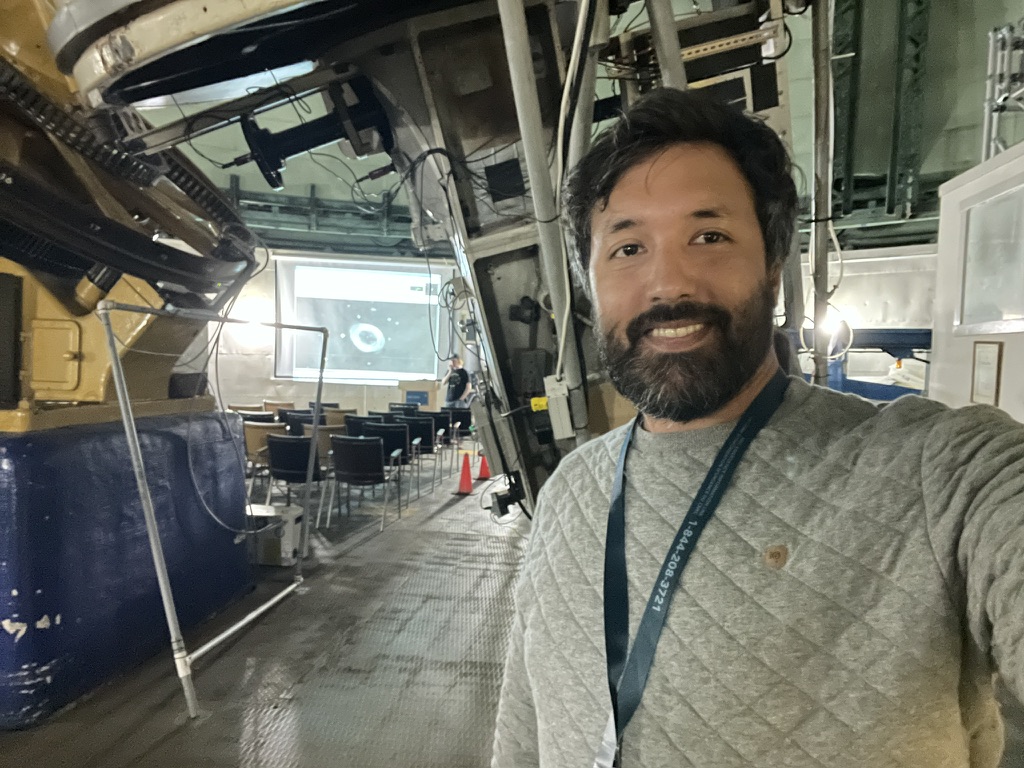
My dad was in town from Toronto, and I was looking for something memorable to do with him and my two daughters in Victoria. The Dominion Astrophysical Observatory (DAO) seemed like the perfect day trip—a mix of science, history, and a chance to stand under a real dome. Walking through the facility, I noticed how much of the public experience was volunteer‑run, and how the media presentations, while full of good information, felt dated and hard to follow at the pace they were delivered.
As an XR developer, that immediately sparked a thought: there had to be a way to make this content clearer, more immersive, and easier to understand.
I asked one of the staff about helping modernize their presentations, and they pointed me to a volunteer sign‑up sheet. While I was filling it out, I asked a simple question: “Have you ever done anything with VR?” Aimee, the coordinator at the Centre of the Universe, mentioned that they actually had around 30 Oculus Go headsets and that the former NRC Victoria director had been the champion of that effort. As someone already working in VR, that was a big hook. A few weeks later, I was meeting him on site and starting to collect data to build what would become a digital twin of the observatory.
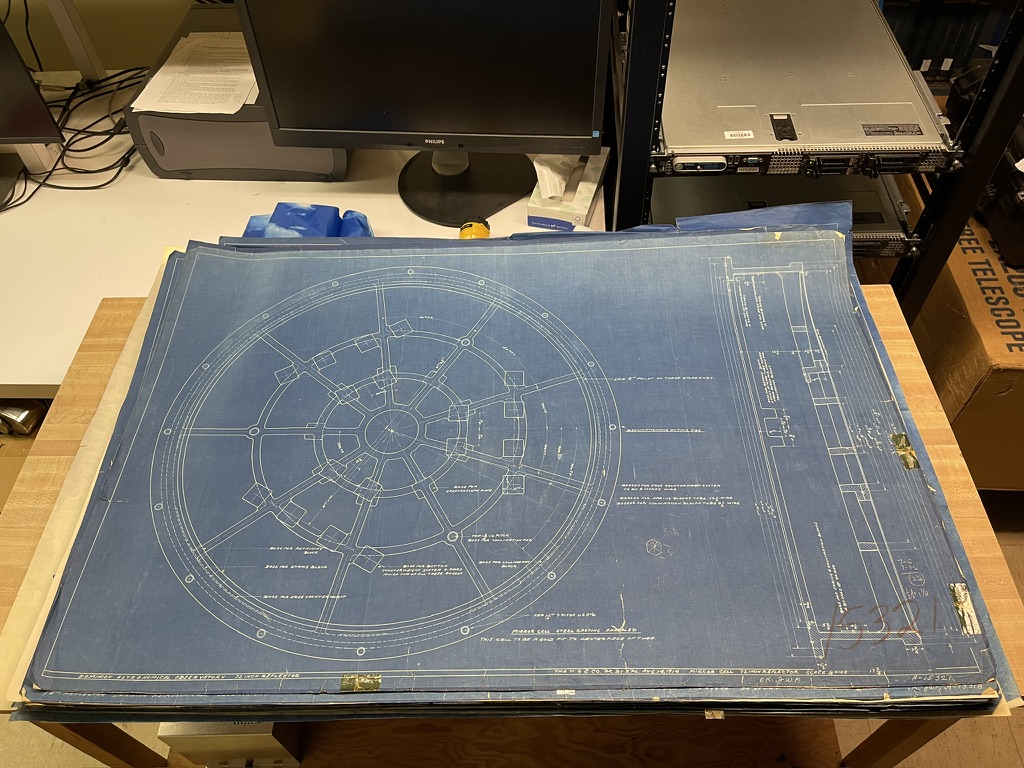
From there, the build shifted into very practical fieldwork. I flew my Mavic Air drone (with my advanced drone license) using DroneDeploy to capture aerial imagery of the site and surrounding landscape. I brought a digital laser measure to record distances and dimensions inside the dome and around the telescope. My iPhone became a constant companion for reference photos and quick scans. The observatory team also helped surface archived images and original blueprints, which gave me precise structural information I could bring into Blender. Piece by piece, I started reconstructing the DAO in 3D: the dome, the floor layout, the telescope structure, and the surrounding environment.
A few months later, at a local star party, I met a member of the Victoria RASC club who was certified to operate the DAO telescope. I asked him how he’d earned that responsibility, and he pointed me toward Ben, the president of the Friends of the DAO. That introduction led to the NRC, where I went through security clearance and training to operate the telescope for Saturday night public star parties.
That access was a turning point for the project.
Being in the dome as an operator, instead of just a visitor, let me capture the details that matter for a simulation: how the telescope moves, what the control panels look like, how the software UI is laid out, the pacing of a real observing session, even the subtle sounds of motors, shutters, and people working in the space. I recorded reference images, took more measurements, captured ambient audio, and paid close attention to the workflows: how alignment is done, how targets are selected, and how the instrument transitions from one object to another. All of these references fed directly into the design and interactions inside Night Simulator.
On the technical side, the app is built in Unity using the XR Interaction Toolkit, targeting standalone VR headsets. The DAO environment and telescope models were created in Blender based on the field data, then brought into Unity, where I wired up interactions like slewing, focusing, and navigating the space. I leaned on AI language models to help implement and validate complex astronomical calculations, drawing on sources like Jean Meeus’s algorithms to keep motions and object positions believable inside the constraints of real‑time VR.
Although I collaborated with an art director for the cover art and the overall UX/UI look and flow, the core research, modelling, systems design, and development have been my own. Night Simulator is very much the product of that full stack of work: time on the mountain, time in the dome, and a lot of evenings turning that reality into an experience you can step into through a headset.
